First Steps When a Supply Line Bursts in a Pinellas County Home
Burst pipe first steps for a Largo, FL home. Where to shut the water off, what to photograph, and what to move before anyone else arrives.
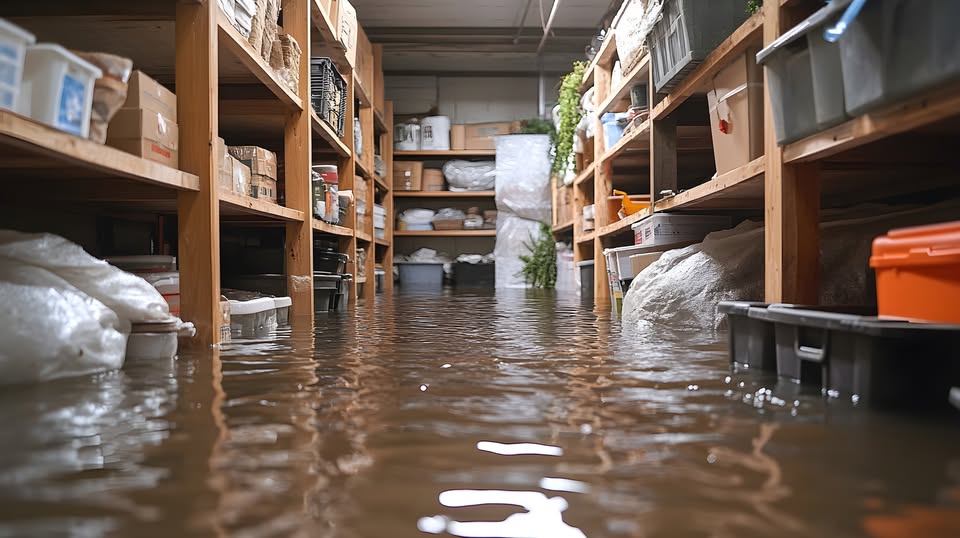
Water damage in a Largo home is decided in the first hour. What you do before any crew arrives usually matters more than anything that happens on day three, because every minute of running water adds gallons and every hour of soaking pushes moisture deeper into material that could have been saved.
This guide gives you the order to work in. Stop the water, make the area safe, protect what can still be protected, then document. Doing those four things in that sequence protects both your building and your claim.
Water coming in right now? Call and we will confirm an arrival window for your address.
Call (833) 289-9993Find the shutoff before you do anything else. For a fixture, the angle stop under the sink or behind the toilet closes it in seconds. For a supply line failure inside a wall, you need the main, which in most Largo homes sits at the meter box near the street or on the exterior wall where the supply enters.
A half inch supply line releases several hundred gallons an hour. Nothing else you do in the first hour saves as much as closing that valve.
If the water is coming from the ceiling and you cannot find a source, check the floor above and the air handler closet. In Florida homes a condensate overflow is at least as common as a burst pipe.
If outlets, a panel or anything electrical is wet, switch the breaker off before you walk through the water. Do not reach a panel that is itself wet, and do not stand in water to operate one.
Leave the power off until the area is dry or an electrician clears it. Running a vacuum or a fan from a wet outlet is how a manageable loss becomes an injury.
Absorbent items take on damage fastest. Lift rugs, cardboard boxes, documents, electronics and anything with a particle board base off the floor. Furniture that cannot be moved gets blocked up on foil or plastic so the legs stop wicking.
In a slab home this matters more than people expect. Water travels sideways under the flooring, so items two rooms away from the leak can still be sitting in a wet zone.
Not sure whether this is a job for a crew? Describe what you are seeing and we will tell you plainly.
Call (833) 289-9993Take wide shots of each affected room, then close ups of the water line on the walls, the source if it is visible, and any damaged contents. Put a tape measure in frame against the water line if you can.
Photograph before you move or remove anything. Once material is out and the floor is dry, the evidence your adjuster needs to evaluate the claim is gone.
| Common reaction | Why it backfires |
|---|---|
| Opening windows to air it out | Florida dew points sit in the seventies much of the year, so outside air adds moisture instead of removing it |
| Running a household fan on wet carpet | It evaporates surface water into the room and drives humidity into cool wall cavities |
| Pulling up flooring immediately | Removal before documentation weakens the claim, and some flooring is salvageable |
| Waiting for the adjuster before mitigation | Policies generally require you to prevent further damage, so waiting can work against you |
Material does not fail on a schedule you can see. The useful way to think about it is the window before each decision gets harder.
| Time since the loss | What is happening |
|---|---|
| 0 to 1 hour | Free water spreads to the limits of the flooring run, wicking begins at wall bases |
| 1 to 24 hours | Drywall, pad and insulation saturate, indoor humidity climbs |
| 24 to 48 hours | Microbial growth can begin on wet porous material in Florida conditions |
| 3 days and beyond | Visible growth, swollen material and a scope that shifts from drying to removal |
That is why extraction is not something to arrange next week. The cost curve follows the clock more closely than it follows the size of the leak.
A small clean water spill on tile that you catch immediately is yours to wipe up. Call a crew when water has reached carpet and pad, when it has run under a wall or cabinet, when the source was a toilet or sewer line, or when you cannot tell how far it traveled.
The honest test is whether you can reach all the water with a towel. If the answer is no, the remaining water is inside the building assembly, and surface drying will not get it out.
For the full scope of extraction, drying and repair work across Pinellas County, see water damage restoration in Largo, FL.
Get it handled
Call if any of these apply. A two minute conversation is usually enough to tell you whether the work needs a crew.
Availability is confirmed when you call, with an arrival window for your address.
Call (833) 289-9993Related guides
Burst pipe first steps for a Largo, FL home. Where to shut the water off, what to photograph, and what to move before anyone else arrives.
Water damage in a Largo slab home moves sideways, not down. Here is what happens hour by hour, and which first-day calls decide what gets saved.
Mold growth timeline for a wet Largo, FL home. What happens each day, why Florida humidity speeds it up, and when drying alone stops working.
Services
Truck mount and portable pumping for standing water in homes and businesses.
Muck out, sanitizing and structural drying after storm or surge water.
Questions
Stop the water at the shutoff. Everything else, including photographs and phone calls, comes after that. Every minute of flow adds gallons to the loss.
Either order works. Policies generally require you to prevent further damage, so mitigation can begin before an adjuster is assigned.
Free water spreads within the hour and materials saturate within a day. In Florida humidity, microbial growth can begin on wet porous material in about two days.
Household fans evaporate surface water into the room without removing it from the air. That raises humidity and pushes moisture into cool wall cavities.
Yes if outlets, a panel or wiring are wet, and only if you can reach the breaker safely. Never operate a wet panel or stand in water to reach one.
Usually not for a contained clean water loss. Sewage, surge water in living areas or a submerged electrical system are the cases where staying elsewhere is safer.
Wide shots of each affected room, the water line on the walls, the source, and any damaged contents. Photograph before you move or remove anything.
Yes if it reached carpet, a wall base or a cabinet. Water inside an assembly will not come out with a towel, and a small leak found early costs far less than the same leak later.
In a condo or villa it depends on the association documents and where the failure sat. Documenting the source early is what settles the question later.
Availability is confirmed when you call, and you get an arrival window for your address rather than a generic promise.
Call and describe what you are seeing. We confirm an arrival window for your address.