Serving Largo & Pinellas County, Florida Availability confirmed when you call ยท (833) 289-9993

Largo, FL · Pinellas County

Flood Damage Cleanup in Largo, FL

Flood damage cleanup in Largo, FL is a different job from a clean supply leak. Water that came in from outside brings sediment, bacteria and whatever the storm drain carried. That means removal first, drying second, and sanitizing in between.

Pinellas County learned this the hard way during the 2024 storm season, when surge and rainfall pushed water into coastal and low-lying neighborhoods across the county. Homes that were mucked out and dried properly came back. Homes where wet insulation stayed behind the drywall smelled and grew mold within weeks.

Availability confirmed when you call, with a confirmed arrival window for your address.

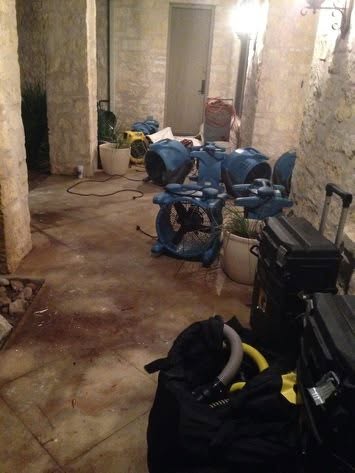
Row of blue air movers drying a covered patio slab after flood damage cleanup near Largo, FL

What the work includes

What Flood Damage Cleanup Covers in a Largo Property

Muck-Out and Debris Removal

Mud, silt, ruined contents and saturated building materials come out first. We shovel and squeegee the sediment, haul debris to a staging point, and photograph unsalvageable items for your record. A clean shell is the only place drying equipment actually works.

Measured Flood Cuts and Insulation Removal

Drywall is cut above the wick line, usually a set height above the water mark, and wet batt or blown insulation is pulled from the cavity. Leaving wet insulation behind a patched wall is the most common flood mistake. Cavities are then opened for airflow and inspected for existing damage.

Cleaning and Antimicrobial Treatment

Framing, block, slab and sill plates get cleaned, then treated with an antimicrobial appropriate to the material. Nail heads, plate seams and the base of block walls hold the most residue, so those get direct attention before any equipment goes in.

Structural Drying and Verification

Once the shell is clean, air movers and dehumidifiers dry the framing, slab and remaining assemblies. Readings are logged daily to a dry standard, and we hold off on rebuild until the wood and block are at a moisture content that will not feed mold behind new drywall.

Tell us the source and the flooring type and the crew arrives with the right equipment on the first trip.

Call (833) 289-9993

Process

How a Flood Damage Cleanup Job Runs, Step by Step

01

Safety and Utility Check

Power and gas status, standing water depth, and any structural concern get checked before entry. Flood water near a panel or a gas appliance is handled with the utility involved.

02

Water Out, Contents Out

Remaining water is pumped and extracted, then contents are sorted into salvage and loss piles with photos taken as we go.

03

Controlled Demolition

Flood cuts, base removal, wet insulation and unsalvageable flooring come out and get bagged. We keep debris contained rather than tracked through dry rooms.

04

Clean, Treat, Then Dry

The shell is cleaned and treated, then equipment is set for structural drying with daily moisture logs on framing and slab.

05

Dry Verification and Rebuild Scope

When the readings hold, you get the final log and a written rebuild scope covering insulation, drywall, trim, paint and flooring.

Local conditions

Flood Damage Cleanup and the Way Largo Buildings Are Built

Flood Zones and Elevation Around Largo

Largo sits inland of the beaches, but parts of the city drain toward Cross Bayou, McKay Creek and Allen's Creek. Properties near those corridors and in the low-lying western neighborhoods carry mapped flood risk, and FEMA flood maps for Pinellas County place many of them in special flood hazard areas. Elevation of a foot or two decides whether water reaches the finished floor.

Pinellas County also assigns hurricane evacuation zones separate from flood zones. A home can sit in evacuation Zone A for surge risk and still be outside a mapped flood zone for rainfall. We note both when scoping, because insurance handling for surge, rain intrusion and plumbing failure is not the same.

Repair Rules After a Flood in Pinellas County

Substantial damage and substantial improvement rules apply to buildings in special flood hazard areas. If repair costs reach a set percentage of the structure's market value, the local floodplain administrator can require the building to be brought into compliance, which may include elevation. That determination is made by the local building department, not by a contractor.

Permits for structural repairs, electrical and mechanical work go through the City of Largo Building Division for properties inside city limits, and Pinellas County Building Services for unincorporated addresses. We scope the drying and cleanup, document the water line for the damage determination, and coordinate with the licensed trades your rebuild needs.

Signs You Need Flood Damage Cleanup Now

  • A visible water line on exterior stucco or interior drywall
  • Silt or sediment left on the slab or in floor transitions
  • Insulation sagging out of a wall cavity or ceiling
  • Doors and windows that swelled and now stick in the frame
  • Musty or sour smell that returns when the air conditioning runs
  • Buckled baseboard, warped door casing or rusting fastener heads

Recognize two or more of these? Call and describe them. We will tell you what the readings usually mean.

Call (833) 289-9993
Related services

Services That Commonly Run With Flood Damage Cleanup

Water losses rarely stay in one category. These are the services most often scoped alongside this one.

Emergency Water Extraction

Standing water removal for Largo homes and businesses, measured in gallons per hour instead of buckets. Crews arrive with submersible pumps, truck-mount extractors and weighted carpet wands to clear water off floors before it climbs the drywall. Wet contents get blocked or moved, the water line gets recorded, and drying equipment goes in on the same visit so the structure starts losing moisture immediately.

Emergency Water Extraction details →

Storm and Hurricane Damage Repair

Storm and hurricane damage repair for Largo properties dealing with wind-driven rain, roof breaches and window failures. Crews stabilize the opening with tarping or board-up, remove water and wet materials, dry the structure with logged readings, and rebuild the affected interior. Documentation is built for insurance from the first visit, because wind, rain and surge are handled differently on a claim.

Storm and Hurricane Damage Repair details →

Mold Remediation

Mold remediation for Largo homes where humidity, a slow leak or a past water loss let growth take hold. Work areas are contained under negative pressure with HEPA filtration, affected porous materials are removed and bagged, and remaining surfaces are HEPA vacuumed and wiped. The moisture source is corrected first, because remediation without a dry structure simply grows back.

Mold Remediation details →

Structural Drying and Dehumidification

Documented structural drying for Largo properties, with equipment counts calculated from room volume, class of water and affected materials. Low-grain refrigerant dehumidifiers handle the load while air movers keep evaporation moving, and specialty tools dry wall cavities, hardwood and cabinet boxes in place. Daily readings prove progress, and equipment stays until the material hits a documented dry standard.

Structural Drying and Dehumidification details →

Service areas

Flood Damage Cleanup Across Pinellas County

This service is available in Largo and the surrounding communities below. Each location page covers the local water utility, permitting authority, housing eras and flood conditions.

Questions

Flood Damage Cleanup Questions From Largo Property Owners

Is flood water safe to clean up myself?

Treat it as contaminated. Storm and groundwater carry bacteria, fuel residue and sewage in some cases. Protective gear, proper disposal and antimicrobial treatment matter, and porous materials that soaked it up should be removed rather than dried.

Does homeowners insurance cover flooding?

Standard homeowners policies generally exclude rising water and surge. That coverage typically comes from a separate flood policy through the NFIP or a private carrier. Wind-driven rain through a storm-damaged roof is often handled differently, which is why the source matters.

How high do you cut the drywall?

The cut is set above the measured wick line, and the cavity is checked with meters before we choose a height. Where water rose only a few inches, a low cut is often enough. Where insulation is soaked to the top plate, the whole wall may come out.

Can flooring be saved after a flood?

Tile can often be cleaned and kept if the substrate dries. Carpet pad, laminate, engineered plank with a fiberboard core, and glued-down materials over a contaminated slab usually come out. We decide by material and water category, not by guess.

How long before rebuild can start?

Only after the framing and slab hold a dry reading. That is commonly five to ten days on a flood job, longer if block walls and thick slabs are involved. Closing walls early traps moisture and creates a mold problem inside a finished room.

What is the difference between flood damage and water damage?

Flooding is rising water from outside the building, such as storm surge or drainage overflow. Water damage comes from inside, like a pipe or appliance. The distinction decides coverage, because standard homeowners policies exclude the first.

Do I need to move out during flood cleanup?

For a contained ground-floor loss, usually not. If surge or sewage water reached living areas, or the electrical system was submerged, staying elsewhere during the removal phase is the safer call.

What happens to furniture that sat in flood water?

Upholstered pieces and anything with a particle board core that soaked in contaminated water generally cannot be saved. Solid wood and metal can often be cleaned and dried. We inventory what comes out for your claim.

How do you sanitize after flood water?

Once debris and unsalvageable material are out, surfaces are cleaned and treated with an EPA-registered antimicrobial. Sanitizing before removal just wets contaminated material, so the order matters more than the product.

Can mold start before flood cleanup finishes?

In Florida humidity it can begin within about two days on wet porous material. That is why removal and drying run together instead of waiting for an adjuster to finish scoping the loss.

Need Flood Damage Cleanup in Largo?

Call and describe the situation. Availability is confirmed on that call, you get an arrival window, and we tell you what to shut off or move before the crew arrives.

Call (833) 289-9993Services