Serving Largo & Pinellas County, Florida Availability confirmed when you call ยท (833) 289-9993

FAQ

Water Damage Restoration FAQ for Largo, FL

Straight answers to the questions Largo and Pinellas County property owners ask most often about water extraction, structural drying, mold and insurance. If your situation is not covered here, call and ask.

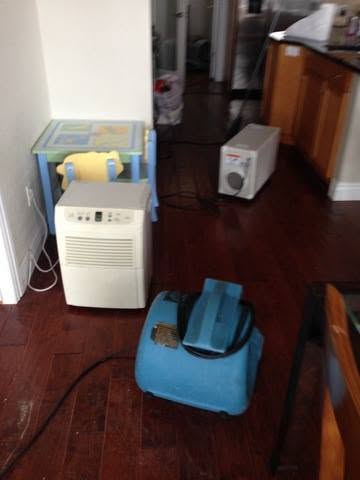
Dehumidifier drying a Largo, FL kitchen after a water leak

Getting Help Started

How soon should I call after finding water?

Immediately after the water is off. Drywall wicks water upward within hours, and in Florida humidity mold can begin on wet organic material within one to three days. The first day is when the scope and the cost are decided.

How fast can a crew arrive?

Availability is confirmed when you call, and you receive a specific arrival window for your address. After a major storm, demand across Pinellas County rises sharply and windows are longer, and we tell you that honestly rather than overpromising.

What should I do while I wait?

Close the water, shut off power to circuits serving wet areas, photograph everything before moving it, and lift contents off the floor. Do not open the windows, since outside air here usually adds moisture rather than removing it.

Can I request service by text or email?

No. This site accepts inbound phone calls only. Scoping a water loss requires a conversation about the source, volume, building type and flooring, and that only works by phone.

Drying and the Work Itself

How long does drying take?

Most residential jobs run three to five days of equipment time. Concrete block walls, terrazzo, thick slabs, plaster and hardwood take longer. The moisture log determines the end point, not a fixed schedule.

What is a dry standard?

It is a target reading taken from the same material in an unaffected part of your building. When the previously wet area matches that reference and holds, the assembly is dry. That comparison is more reliable than any single universal number.

Do I have to leave my home?

Usually no. Equipment is loud and warms the space a few degrees, but families typically stay. If a bedroom sits inside the containment, plan to sleep elsewhere in the house. Mold remediation with heavy removal may warrant staying elsewhere for sensitive occupants.

Can I just run my own fans?

Fans move air but remove no moisture from the space. Without dehumidification, that water condenses on cooler surfaces inside walls and cabinets, which is where secondary damage and mold start.

Will you have to cut open my walls?

Only where the readings say the cavity will not dry. Cavity injection, mat systems and cabinet drying often avoid demolition. When removal is necessary, cuts are set at the wick line rather than at an arbitrary height.

Still unsure what your situation needs? Call and describe it in plain terms.

Call (833) 289-9993

Materials and Salvage

Can my carpet be saved?

With clean water and a fast response, usually yes, with pad replacement. Gray water from an appliance is case by case. Sewage or flood water means carpet and pad both come out, because contaminated backing cannot be cleaned to a safe standard.

What about hardwood floors?

Solid wood often responds to mat drying if we start within a day or two, and refinishing afterward restores it at a fraction of replacement cost. Laminate and engineered products with fiberboard cores swell irreversibly and rarely survive.

Can wet cabinets be saved?

Often, if the particle board base has not delaminated. We dry the void under the box and read the material directly. When the base crumbles at the edge, that section is replaced rather than dried.

Is tile over a slab a problem?

It can be. Bonded tile traps moisture in the slab and the adhesive layer, so we read under and around it. If moisture will not release, targeted removal beats sealing water beneath a floor you paid to keep.

Mold, Health and Air Quality

How quickly does mold start?

Commonly within one to three days on wet organic material under warm, humid conditions, which describes a Largo home for most of the year. That is why drying speed changes the scope of a job so dramatically.

Does bleach kill mold?

On hard, non-porous surfaces it can help. On drywall, wood and insulation it adds moisture, does not reach the growth structure inside the material, and often makes the situation worse. Porous material with real growth is removed.

Can you both test and remediate mold?

Florida rules generally separate assessment and remediation on the same project. For jobs needing a protocol and clearance, an independent licensed assessor writes the scope and verifies the result, and the remediation is performed to that written protocol.

Is there a safe mold level?

No agency has established numeric indoor limits. The practical standard is comparison to the outdoor baseline, with no visible growth and no wet materials remaining. That is what a verification result reports against.

Insurance, Cost and Documentation

Is water damage covered by homeowners insurance?

Sudden accidental discharge from a plumbing system, such as a burst supply line or a failed water heater, is commonly covered. Long-term seepage, groundwater and surge generally are not. Flood coverage comes from a separate policy.

What documentation do I receive?

Photographs, a moisture map, daily readings by room and material, equipment counts and a written scope covering mitigation and repair. That file goes to you and is formatted for your adjuster or property manager.

Should I wait for the adjuster before starting?

No. Policies expect you to prevent further damage. Photograph everything, then start extraction. Documentation preserves what the adjuster needs to see, including the high-water line and the source.

Do you provide estimates over the phone?

No. Scope depends on what is actually wet, which requires meters on site. On the call we confirm availability, an arrival window and what equipment the crew brings, then the scope is written from real readings.

Services

Services These Questions Refer To

Structural Drying and Dehumidification

Documented structural drying for Largo properties, with equipment counts calculated from room volume, class of water and affected materials. Low-grain refrigerant dehumidifiers handle the load while air movers keep evaporation moving, and specialty tools dry wall cavities, hardwood and cabinet boxes in place. Daily readings prove progress, and equipment stays until the material hits a documented dry standard.

Structural Drying and Dehumidification details →

Mold Remediation

Mold remediation for Largo homes where humidity, a slow leak or a past water loss let growth take hold. Work areas are contained under negative pressure with HEPA filtration, affected porous materials are removed and bagged, and remaining surfaces are HEPA vacuumed and wiped. The moisture source is corrected first, because remediation without a dry structure simply grows back.

Mold Remediation details →

Carpet Water Removal and Drying

Carpet water removal and drying for Largo homes, rentals and offices where a clean water loss soaked the carpet and pad. Weighted extraction pulls water from the fibers, the pad is replaced where it is saturated, and float drying with dehumidification finishes the assembly. Antimicrobial treatment and tack strip inspection are part of the work, so the carpet goes back down clean and flat.

Carpet Water Removal and Drying details →

Hardwood Floor Drying and Salvage

Hardwood floor drying for Largo homes where a leak reached a wood floor and cupping has started. Specialty mat and panel systems pull moisture up through the boards and out of the subfloor while dehumidification holds the room at a controlled humidity, giving solid wood a real chance to flatten instead of being demolished. Readings guide the process, and we tell you early when a floor will not come back.

Hardwood Floor Drying and Salvage details →

Sewage Cleanup and Sanitizing

Sewage cleanup for Largo homes and businesses hit by a sewer backup, lift station failure or toilet overflow. Crews work the loss as Category 3 water: contaminated liquid extracted and disposed of properly, affected porous materials removed and bagged, hard surfaces cleaned and sanitized, then the structure dried and verified. Containment and HEPA filtration keep the contamination out of clean rooms.

Sewage Cleanup and Sanitizing details →
Question Not Answered Here?

Call and ask. Availability is confirmed when you call, and you get a specific arrival window if a crew is needed.

Call (833) 289-9993Services