
Mold Growth Timeline in Florida Humidity: Day One to Day Ten
Every conversation about mold in Florida eventually reaches the same question: how long do I have? The honest answer is that mold needs three things, and in Largo two of them are always present. It needs a food source, which is the paper on your drywall, the wood in your framing and the dust on your surfaces. It needs warmth, which we have year round. The only variable is moisture.
That is why response time drives cost. Below is the timeline we observe on real jobs, and where the decision points sit.
Day One: Wet Materials, No Growth Yet
On the first day, a water loss is a drying problem. Drywall has absorbed water, framing is damp, carpet pad is saturated and cabinet bases are swelling. Nothing is growing yet. Spores are present in every building on earth, but they are dormant.
This is the cheapest day of the entire event. Extraction and dehumidification started now often means no demolition beyond carpet pad and baseboard. The hour-by-hour path water takes through a slab home explains why speed matters so much on the first day.
Days One to Three: The Window Closes
Published industry guidance and lab studies converge on the same range: mold can begin to establish on wet organic material within roughly 24 to 72 hours under favorable conditions. Favorable conditions in this context means what a Largo house provides naturally in summer, with warm temperatures and high humidity.
What growth looks like at this stage is not the black patch people picture. It is a faint discoloration, a slightly fuzzy texture on the paper facing inside a wall cavity, or nothing visible at all while a musty odor develops. Smell is often the first honest indicator, because it comes from compounds released as the growth metabolizes.
The practical consequence is scope. A cavity dried within this window usually stays. A cavity that is still wet on day four is now a candidate for removal, because closing new drywall over an established colony creates a problem you will pay to solve twice.
Days Three to Seven: Growth Becomes Visible and Spreads
By the middle of the first week, colonies are visible on damp drywall paper, on the back of baseboard and on the underside of carpet backing. Growth is also airborne at this point, because disturbed colonies release spores into the room. That is why containment and negative air matter once growth is present, and why cutting into a moldy wall without containment spreads the problem to clean rooms.
This is also when secondary areas get affected. Elevated indoor humidity from an untreated wet area supports surface growth well away from the original leak, especially in closets, on exterior wall cavities and around air conditioning duct boots where cold surfaces meet humid air.
At this stage the job has changed character. It is no longer drying with minor demolition. It is remediation: contained removal of affected porous materials, HEPA cleaning of what stays, correction of the moisture source, then verification. The full mold remediation process describes what that looks like on site.
Days Seven to Ten: Structural and Air Quality Consequences
After a week of sustained moisture, growth is established on multiple materials and has often penetrated the paper facing into the gypsum core. Wood framing supports surface growth. Insulation holds both moisture and spores. Odor is noticeable throughout the home rather than in one room.
Occupant complaints usually begin in this window. People report congestion, headaches or asthma symptoms that improve when they leave the house. Sensitivity varies widely between individuals, which is why some households notice nothing while another family in an identical situation is symptomatic within days.
Removal scope grows accordingly. Where day two might have meant replacing baseboard and pad, day ten commonly means drywall removal to a set height, insulation replacement, HEPA cleaning of framing and contents, and post-remediation verification before rebuild.
Why the Florida Timeline Is Faster
Three local conditions compress the schedule. First, average relative humidity in Pinellas County is high year round, with summer dew points in the seventies. Materials release moisture slowly into already humid air, so they stay wet longer without mechanical drying.
Second, temperatures rarely drop low enough to slow biological activity. In colder climates a wet wall in February buys weeks. Here it buys days.
Third, our air conditioning creates cold surfaces inside warm humid buildings. Supply ducts, air handler closets and poorly insulated exterior wall cavities all provide condensation points. This is why some Largo homes develop mold with no water loss at all, purely from humidity behavior and a marginal system.
What Actually Stops the Clock
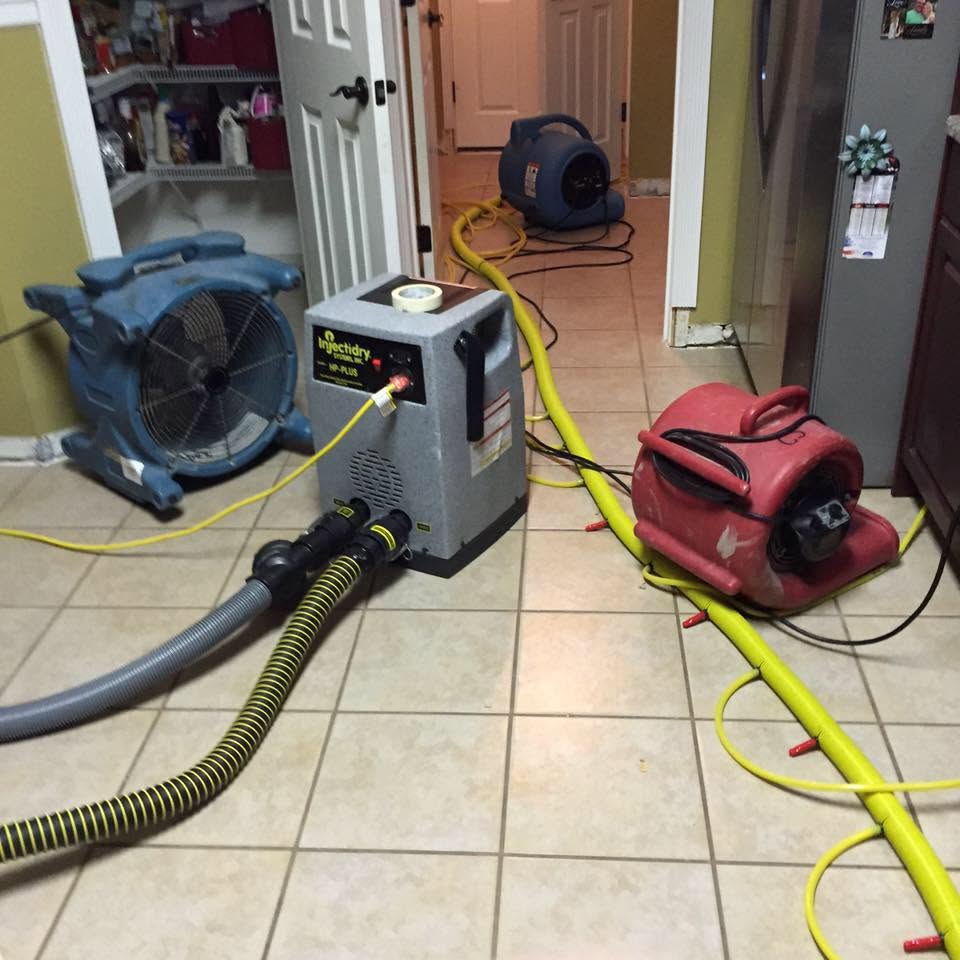
Removing the water is not the same as drying the structure. The clock stops when material moisture content drops to the point where growth cannot sustain itself, and that requires dehumidification in a controlled space, not fans and open windows. Opening windows in July raises indoor moisture rather than lowering it.
It also requires finding every wet pocket. Wall cavities, cabinet voids, subfloor under bonded flooring and insulation above a ceiling all hide moisture from a surface inspection. Meters and thermal imaging exist because eyes and hands are not reliable here. A documented moisture inspection tells you which of those pockets is still wet.
Practical Guidance by Timeframe
If your loss happened today, extract and dehumidify immediately and you will likely avoid remediation entirely. If it happened three or four days ago and materials are still damp, expect some removal, and expect an honest crew to check for growth before closing anything. If it has been a week or more, or if there is odor, budget for containment and remediation rather than drying alone.
And if you cannot find the source at all but the smell is real, start with inspection rather than demolition. Roughly half the mold calls we take trace to a condensate line, a duct issue or a slow supply drip rather than a dramatic flood. Our overview of restoration and drying services explains how the assessment and the work fit together, and availability is confirmed when you call.
Dealing with this right now? Call and get an arrival window for your address.
Call (833) 289-9993