Serving Largo & Pinellas County, Florida Availability confirmed when you call ยท (833) 289-9993

Largo, FL · Pinellas County

Structural Drying and Dehumidification in Largo, FL

Structural drying and dehumidification in Largo, FL is the part of the job that decides whether your house stays dry. Extraction takes the water you can see. Drying removes what soaked into drywall, framing, subfloor and block, and that only happens with the right equipment count in a controlled space.

We size the setup from numbers: room volume, class of water, and how much material is wet. Then we log grain depression and material moisture every day. If the readings stall, the plan changes that day instead of at the end of the week.

Availability confirmed when you call, with a confirmed arrival window for your address.

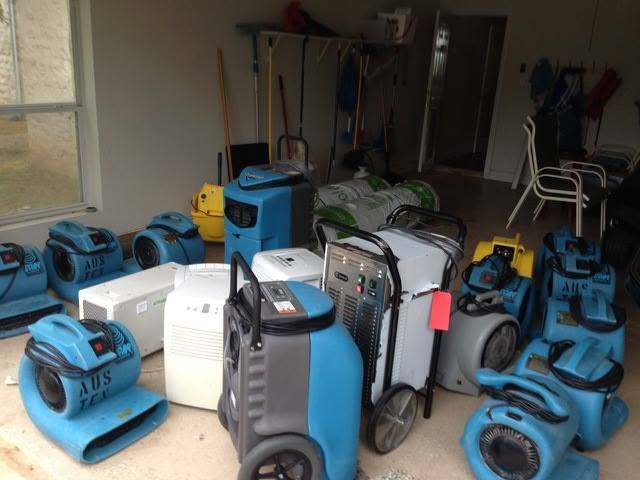
Dehumidifiers and air movers staged in a Largo garage for structural drying and dehumidification

What the work includes

What Structural Drying and Dehumidification Covers in a Largo Property

Calculated Equipment Loads, Not Guesses

Air mover count comes from wet wall and floor surface area. Dehumidifier capacity comes from cubic footage and the class of water. Undersized setups look busy and dry nothing. We document the calculation, so you and your adjuster can see why the equipment count is what it is.

Low-Grain Refrigerant and Desiccant Dehumidification

LGR units pull moisture at low humidity levels where standard dehumidifiers stall. For dense materials like block walls, thick slabs and hardwood, desiccant capacity dries faster and deeper. Choosing the right unit shortens the job and reduces the amount of material that has to be removed.

Cavity, Hardwood and Cabinet Drying Systems

Injection systems push dry air into wall cavities through small base holes. Floor mat systems pull moisture up through hardwood and glued plank instead of removing it. Cabinet and toe-kick drying saves boxes that would otherwise be a full replacement. These tools keep tear-out to a minimum.

Daily Monitoring and a Dry Standard

Each visit records temperature, relative humidity, grain depression and material moisture by room. Drying ends when the wet material matches a dry, unaffected reference area in the same building. That is a defensible standard and it is what insurers expect to see.

Tell us the source and the flooring type and the crew arrives with the right equipment on the first trip.

Call (833) 289-9993

Process

How a Structural Drying and Dehumidification Job Runs, Step by Step

01

Assess Affected Materials

We identify every wet assembly with meters and thermal imaging, then classify the water and the class of loss to set the drying goal.

02

Contain the Drying Area

Poly containment and door seals keep dry air where it belongs. Unaffected bedrooms stay out of the system so the dehumidifiers are not fighting the whole house.

03

Set the Calculated System

Air movers, dehumidifiers and any specialty drying gear are installed, power loads are checked, and day-one readings are recorded in the log.

04

Monitor and Adjust Daily

Readings are taken every visit. Equipment is repositioned as areas dry, and stalled assemblies get injection, mat systems or targeted removal.

05

Verify Dry and Demobilize

When materials meet the dry standard, equipment comes out and you receive the complete moisture log and photo record for your file.

Local conditions

Structural Drying and Dehumidification and the Way Largo Buildings Are Built

Why Gulf Coast Humidity Changes the Drying Plan

Largo averages high relative humidity year round, and summer dew points in the mid-seventies are normal. Outside air holds so much moisture that ventilating a wet room with open windows can raise the moisture load instead of lowering it. Drying here is a closed process almost every time.

We build a closed drying chamber, run dehumidification to control the grain, and use the air conditioning as a partner rather than the primary tool. In shoulder months we sometimes use limited fresh air exchange, but only when the outside grain reading is genuinely lower than inside.

Block Walls, Thick Slabs and Terrazzo

Concrete block with stucco is the standard wall assembly in Largo, and midcentury houses often have terrazzo or thick monolithic slabs. Masonry holds far more water than wood framing and gives it back slowly. A drying plan built for a wood-framed house will fail on a block wall.

For those assemblies we extend equipment time, use desiccant capacity where it helps, and read the block directly with pin meters at multiple heights. Where a bonded floor covers a wet slab, we compare readings under and beside the covering before deciding whether the floor can stay.

Signs You Need Structural Drying and Dehumidification Now

  • Surfaces feel dry but the room smells damp
  • Condensation on windows or return grilles after a leak
  • Paint blistering or drywall tape lifting near the floor
  • Flooring that cupped, peaked or lifted days after cleanup
  • Air conditioning running longer than usual with no comfort gain
  • A prior repair that was closed up without a moisture log

Recognize two or more of these? Call and describe them. We will tell you what the readings usually mean.

Call (833) 289-9993

Related services

Services That Commonly Run With Structural Drying and Dehumidification

Water losses rarely stay in one category. These are the services most often scoped alongside this one.

Hardwood Floor Drying and Salvage

Hardwood floor drying for Largo homes where a leak reached a wood floor and cupping has started. Specialty mat and panel systems pull moisture up through the boards and out of the subfloor while dehumidification holds the room at a controlled humidity, giving solid wood a real chance to flatten instead of being demolished. Readings guide the process, and we tell you early when a floor will not come back.

Hardwood Floor Drying and Salvage details →

Mold Inspection and Testing

Mold inspection and testing for Largo homeowners, buyers and landlords who need facts before spending money. Inspections combine visual assessment, moisture meters, thermal imaging and humidity readings, with air or surface sampling sent to an accredited lab when results will change the plan. You get a written report naming the moisture source, the affected area and the scope of work required.

Mold Inspection and Testing details →

Ceiling and Drywall Repair

Ceiling and drywall repair for Largo homes after a water loss, performed only on assemblies that have been dried and documented. Crews replace damaged board, tape and finish, match knockdown, orange peel or smooth textures, seal stains and repaint the plane so the repair disappears. Insulation and any wet framing issue is addressed before the cavity is closed.

Ceiling and Drywall Repair details →

Service areas

Structural Drying and Dehumidification Across Pinellas County

This service is available in Largo and the surrounding communities below. Each location page covers the local water utility, permitting authority, housing eras and flood conditions.

Questions

Structural Drying and Dehumidification Questions From Largo Property Owners

How many days does the equipment stay?

Most residential dry-outs run three to five days. Block walls, hardwood, plaster and thick slabs can push it to a week or more. The log decides, not the calendar.

Is the equipment loud and can I stay home?

Air movers and dehumidifiers are noticeably loud and warm the space a few degrees. Most families stay home and keep doors to the containment closed. If a bedroom is inside the drying area, plan to sleep elsewhere in the house.

What does it cost to run the equipment?

You will see a bump in the electric bill while units run. That cost is minor next to replacing a floor or a wall system. Insurers generally reimburse reasonable equipment and power draw as part of the mitigation.

Can you dry hardwood or does it always come out?

Solid hardwood over a slab or subfloor often dries with mat systems if we start early and the boards are still attached. Engineered plank with a fiberboard core and laminate typically swell past saving. Early intervention is the difference.

What is a dry standard?

It is a target moisture reading taken from the same material in an unaffected part of the building. When the wet area matches that reference and holds, the assembly is dry. That comparison is more reliable than any single number.

How do you know when the structure is actually dry?

We take a baseline reading from unaffected material in the same building, then dry the wet areas until they match it. That comparison, not a fixed number off a chart, is the dry standard for your house.

What is the difference between an air mover and a dehumidifier?

Air movers drive evaporation, moving moisture out of materials and into the air. Dehumidifiers pull it back out of the air. Running fans without dehumidification just circulates wet air around the house.

Why do you drill holes in the baseboard?

Wall cavities dry far slower than the surface. Small holes behind the baseline let us inject air into the cavity so the bottom plate and insulation dry without removing the drywall.

Can I turn the equipment off at night?

No. Drying is cumulative, and every shutdown lets materials reabsorb moisture from the air, which adds days to the job. If the noise is a problem, tell us and we will look at placement.

Does running the air conditioning help drying?

It helps a little by lowering humidity, but an AC system is not built to pull the volume of water a wet structure gives off. It supports the dehumidifiers rather than replacing them.

Need Structural Drying and Dehumidification in Largo?

Call and describe the situation. Availability is confirmed on that call, you get an arrival window, and we tell you what to shut off or move before the crew arrives.

Call (833) 289-9993Services